
1. Keep each interview as a separate source
The example concerns the Atlas release. In Atlas · earlier decision, the transcript says Maya owns the release and coordinates the launch. In Atlas · updated decision, it says Owen now owns the release, replacing Maya, and coordinates the launch. Both excerpts begin at 00:01.
Open a workspace’s Knowledge → Sources, select both completed transcripts, and extract memory. Add the actual recording date when you know it. An import date is not evidence that one statement supersedes another; this example’s explicit “replacing Maya” wording supplies that relationship.
2. Review the proposed change against both transcripts
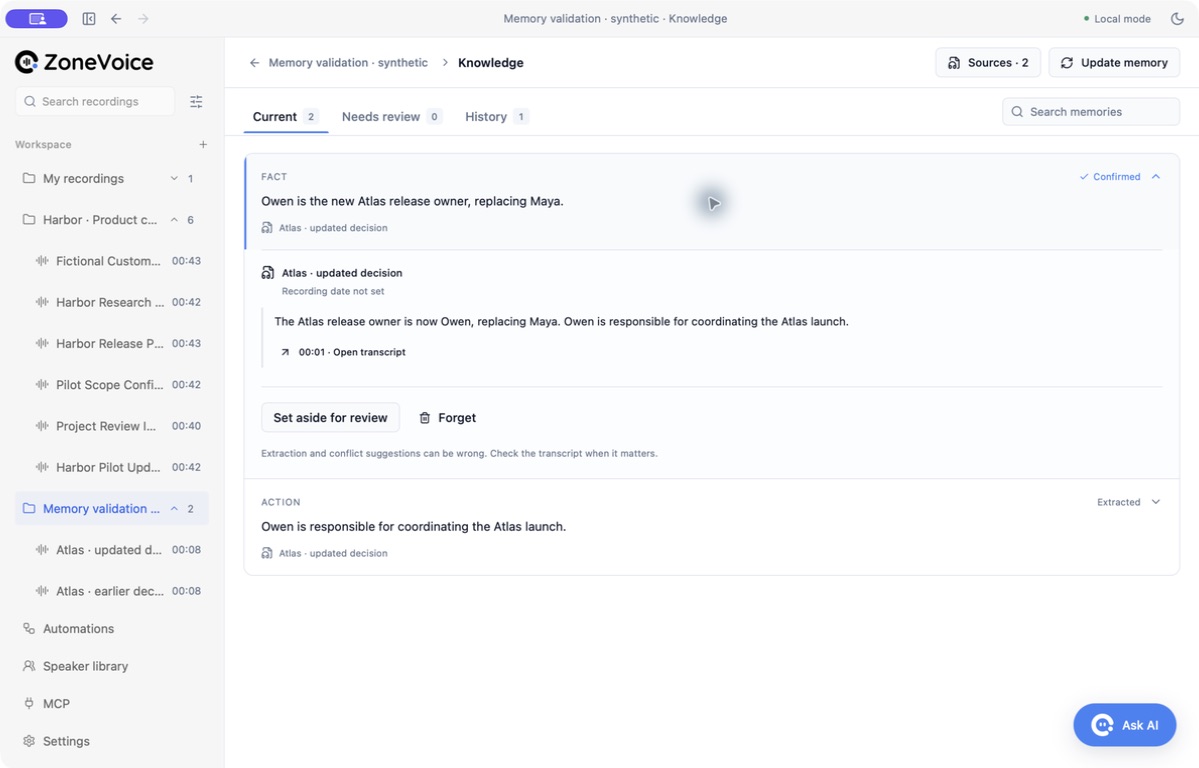
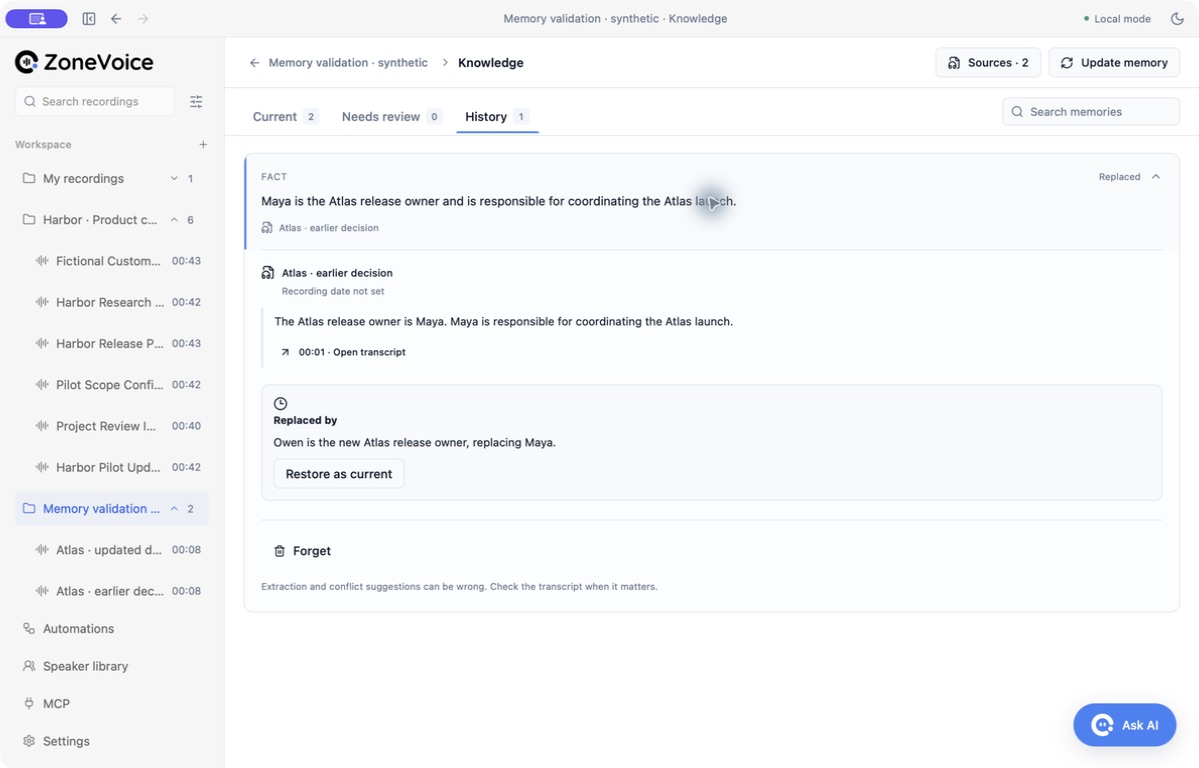
The local extraction produced three facts and two proposed conflicts. Open the evidence for the earlier owner and the updated owner. Confirm that the later statement actually replaces the earlier one, then accept the replacement. The model proposes the relationship; it does not silently overwrite a confirmed fact.
After review, this workspace contained two current facts, one historical fact, and no unresolved review items. Owen’s owner fact and launch responsibility remained current. Maya’s earlier owner fact moved to History.
3. Ask a question, then check the cited moment
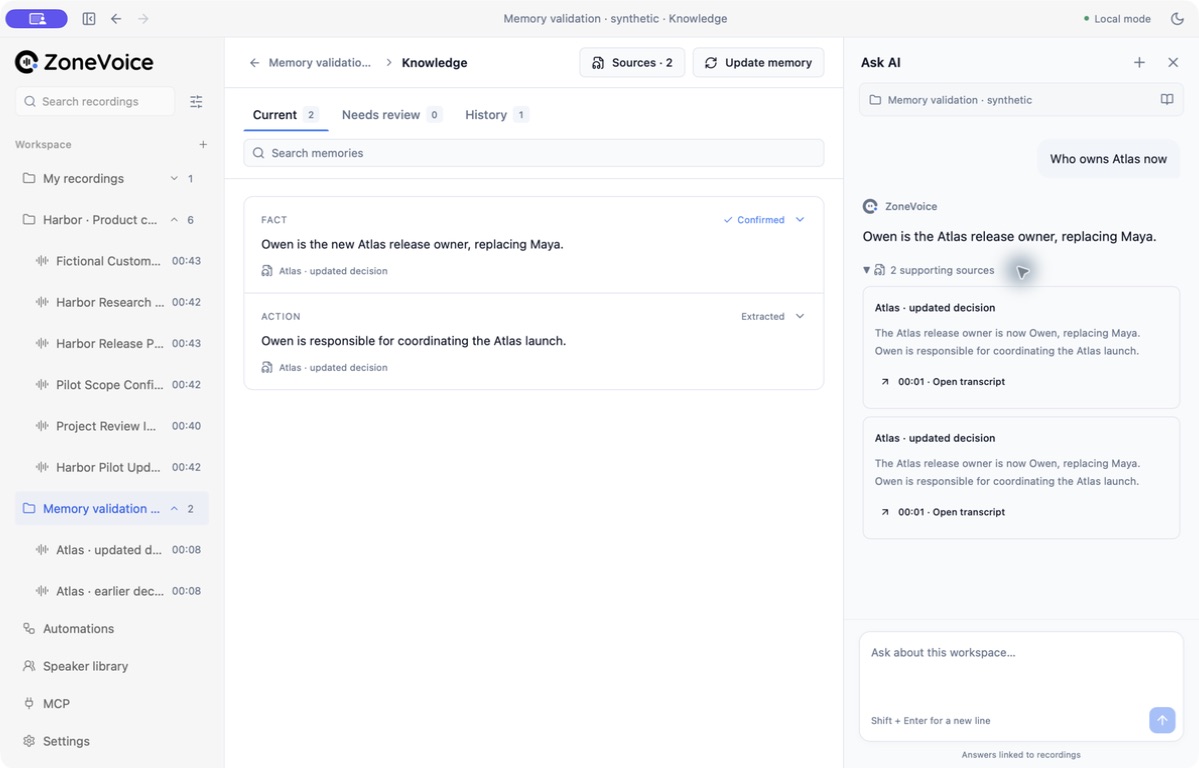
We asked “Who owns Atlas now?” The answer was: “Owen is the Atlas release owner, replacing Maya.” Opening its citation moved the original recording’s player to 00:01.
The screenshot shows two supporting entries because the answer used two extracted facts. Both cite the same updated recording; they are not two independent interviews corroborating the answer. The earlier recording remains available through History.
4. Change the source and watch old facts become unusable
We edited the updated synthetic transcript, replacing Owen with Nina. The two derived facts immediately left Current and appeared under Needs review as source-changed memories. Current dropped to zero. The existing answer was marked out of date, its citation buttons became unavailable, and the panel prompted us to update knowledge before asking again.
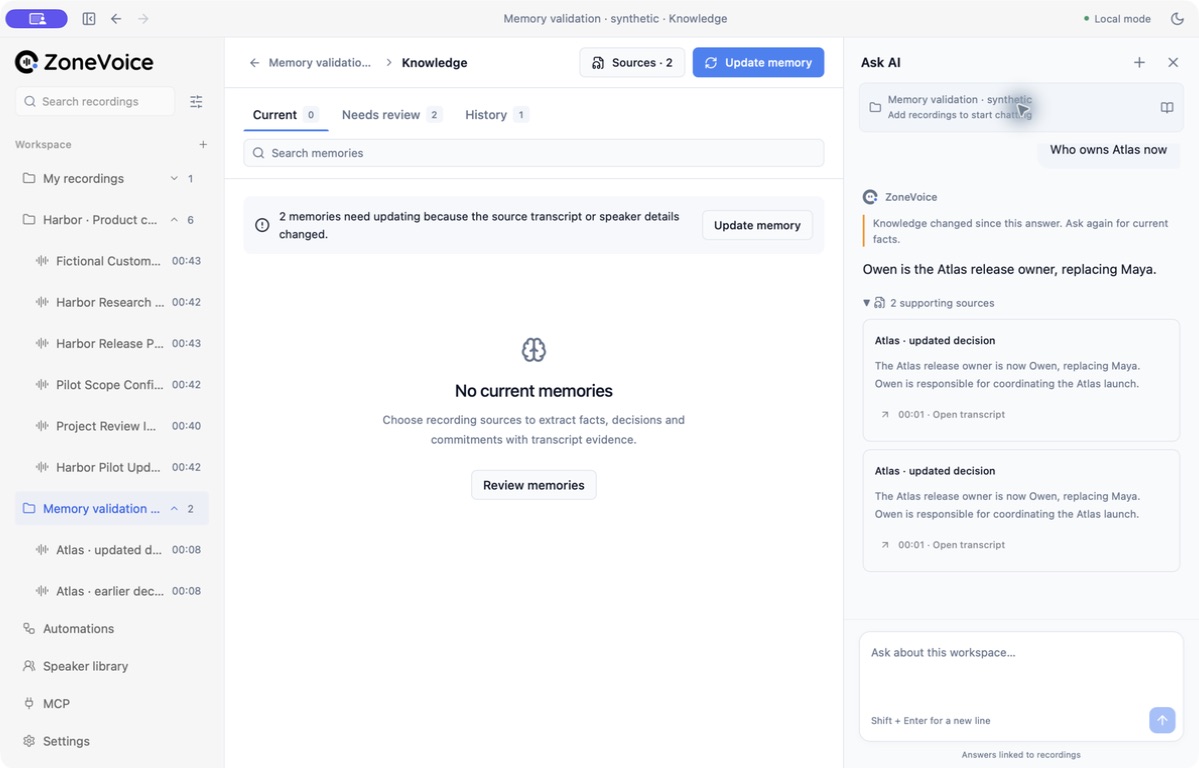
Update memory, compare the new evidence, and review any proposed replacement before using it.
What this knowledge base can cover today
- Select up to 20 completed recordings and 60 extracted facts per workspace. Future recordings are not added automatically.
- Search saved recordings by keyword; ask about current facts within one workspace. Cross-workspace knowledge questions and large-scale semantic retrieval are not implemented.
- Review, set aside, replace, or forget a derived fact. Forgetting a fact does not delete its source recording.
- Keep confirmed facts and history across app restarts. Ask AI chat history is temporary and is not saved after quitting.
MCP reads saved notes and transcripts. Memory facts and history are available inside ZoneVoice.
About this example
Atlas, Maya, and Owen are fictional. The example uses two prepared transcripts and silent audio placeholders. A local model extracted the facts and answered the question. Use this example to follow source references and decision history; its audio cannot demonstrate speech playback or transcription accuracy.
Start with a local transcript · Follow the data boundary · Use saved notes as agent context